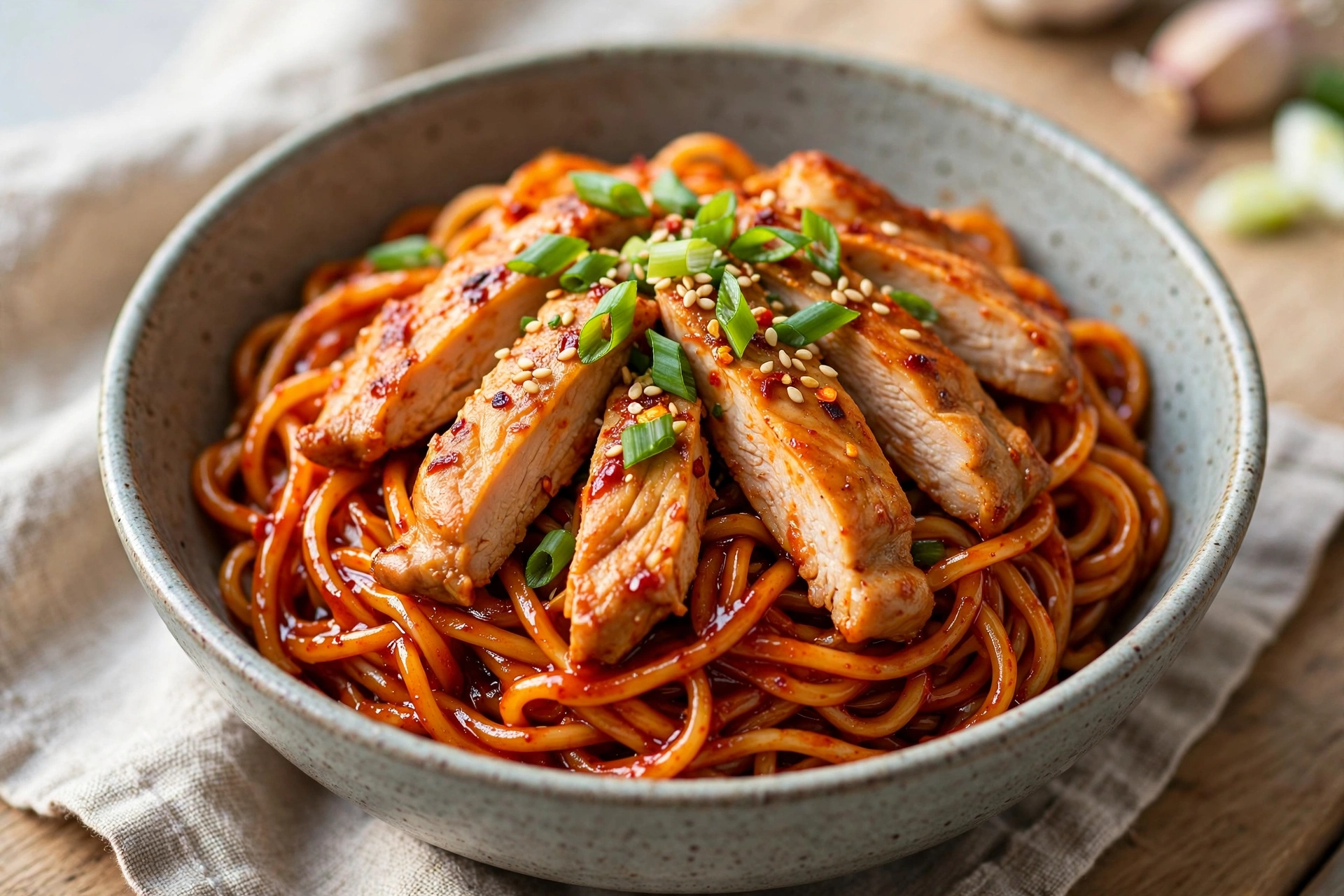
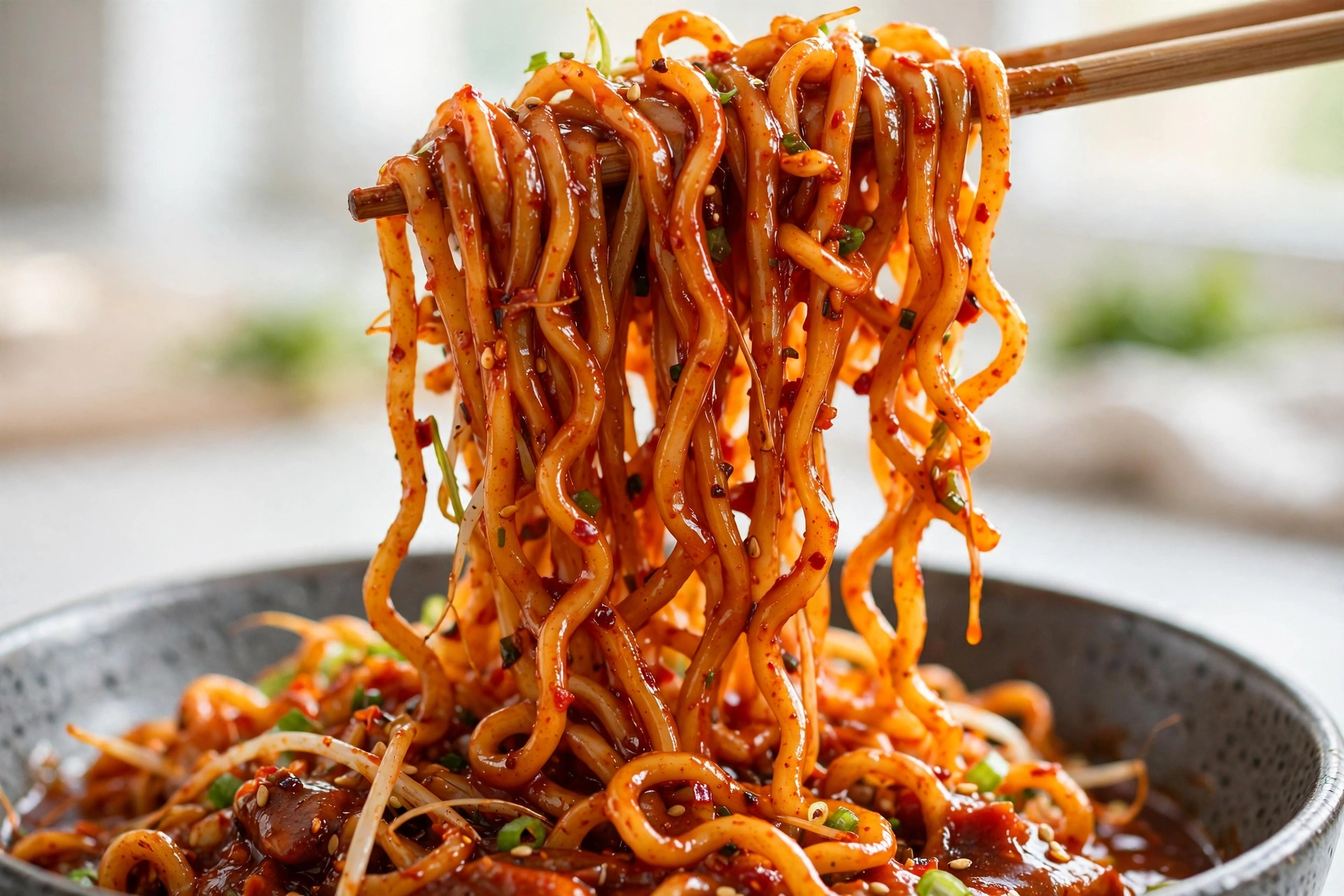
If you have seen these glossy, fiery noodles all over your feed, you are not alone. Spicy gochujang noodles are the viral weeknight dinner everyone is making right now — sweet, savory, a little smoky, and ready in just 20 minutes. The sauce clings to every strand, the chicken stays juicy, and the fresh vegetables keep the whole bowl feeling balanced rather than heavy.
This is the kind of recipe you will come back to on busy nights: one pan for the sauce and chicken, one pot for the noodles, and dinner on the table before you have time to think about takeout. It is high in protein, easy to adjust for heat, and just as good the next day for lunch.
Why You’ll Love This Recipe
- Ready in 20 minutes: Perfect for busy weeknights when you want something fast but homemade.
- High in protein: Lean chicken and a rich, savory sauce make this bowl filling without feeling heavy.
- Viral for a reason: Gochujang brings sweet heat, depth, and that glossy, restaurant-style finish.
- Easy to customize: Make it milder for kids, spicier for heat lovers, or swap in tofu or shrimp.
- One-pan sauce: The sauce comes together in minutes while the noodles cook.
Ingredients
Serves 4. Prep time: 5 minutes. Cook time: 15 minutes. Total time: 20 minutes.
- 8 oz (225 g) ramen noodles or udon noodles
- 1 lb (450 g) boneless, skinless chicken breast, thinly sliced
- 1 tablespoon neutral oil, such as avocado or vegetable oil
- 3 tablespoons gochujang (about 50 g)
- 2 tablespoons soy sauce (30 ml)
- 1 tablespoon honey (21 g)
- 1 tablespoon rice vinegar (15 ml)
- 1 tablespoon sesame oil (15 ml)
- 2 cloves garlic, minced
- 1 teaspoon freshly grated ginger (about 5 g)
- 1 cup shredded carrots (about 110 g)
- 2 cups shredded cabbage or broccoli florets (about 140 g)
- 2 green onions, thinly sliced, for garnish
- 1 tablespoon toasted sesame seeds, for garnish
- Chili flakes and lime wedges, to serve (optional)
How to Make Spicy Gochujang Noodles
- Cook the noodles. Bring a large pot of water to a boil and cook the noodles according to the package directions until just tender. Drain, reserving 1/2 cup (120 ml) of the noodle cooking water, and set aside.
- Make the gochujang sauce. While the noodles cook, whisk together the gochujang, soy sauce, honey, rice vinegar, sesame oil, garlic, and ginger in a small bowl until smooth. Add a splash of the reserved noodle water if you want a looser, glossier sauce.
- Cook the chicken and vegetables. Heat the oil in a large skillet over medium-high heat. Add the chicken in a single layer and cook for 4 to 5 minutes, until golden and cooked through. Add the carrots and cabbage or broccoli and cook for 2 to 3 minutes more, until just tender-crisp.
- Toss everything together. Pour the sauce over the chicken and vegetables, then add the drained noodles. Toss well for 1 to 2 minutes, adding reserved noodle water a little at a time, until every strand is coated and glossy.
- Garnish and serve. Divide the noodles among bowls and finish with sesame seeds and green onions. Serve right away with chili flakes and lime wedges, if you like.
Pro Tips
- Do not overcook the noodles — they will finish cooking in the hot sauce and should stay slightly springy.
- For an oven version, roast the chicken at 425°F (220°C) for 12 to 15 minutes, then toss it with the sauce and noodles.
- Balance the heat: add an extra teaspoon of honey for a milder bowl, or extra gochujang and chili flakes for more fire.
- Slice the chicken thinly and evenly so it cooks quickly and stays tender.
- Use the starchy noodle water to loosen the sauce — it helps the sauce cling beautifully to the noodles.
FAQ
Can I make spicy gochujang noodles less spicy? Yes. Use 2 tablespoons of gochujang instead of 3, add a little more honey, and skip the chili flakes.
Can I use a different protein? Absolutely. Try tofu, shrimp, ground turkey, or thinly sliced beef. Adjust the cooking time so the protein is cooked through before you add the sauce.
Can I make this ahead? Yes. Store leftovers in an airtight container in the refrigerator for up to 3 days. Reheat gently with a splash of water to loosen the sauce.
What noodles work best? Ramen noodles and udon noodles both work well. Use whichever you have — just cook them until just tender, not soft.
Nutrition Note
Per serving (estimate): about 520 calories, 38 g protein, 58 g carbohydrates, and 16 g fat. These values are estimates only and will vary with the noodles, protein, and brands you use.